
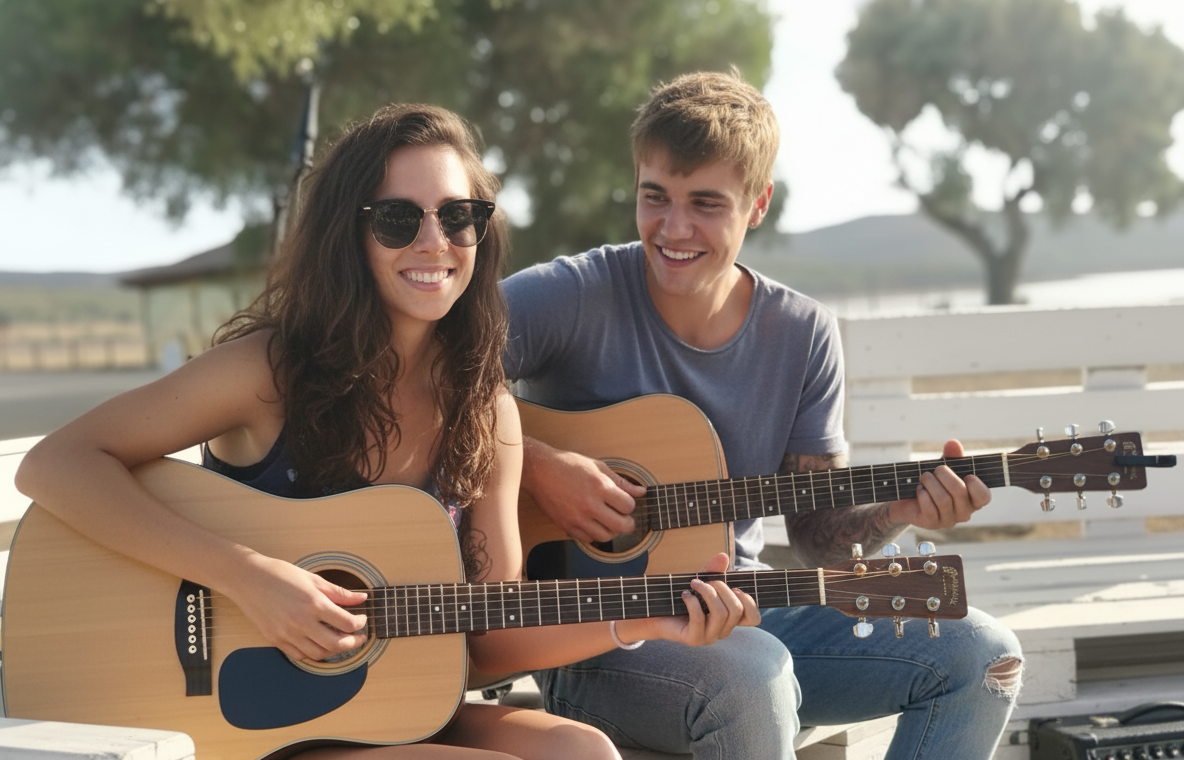
Spoiler: Everything you’re about to see is 100% AI-generated

AI has officially entered its chaotic, magical era — and I’m here for it.
What started as a quiet afternoon, one real photo, and a burst of curiosity turned into a full gallery of convincingly realistic scenes… including a fake jam session with a world-famous pop star.
Welcome to the behind-the-scenes of how I used Nano Banana AI, Google’s new image generation and editing tool, to create content that makes you look twice.
This is not just a showcase.
It’s a case study on how content marketing with AI can elevate brand storytelling, speed up creative workflows, and open wild new possibilities for companies ready to embrace the future.
Why I chose Nano Banana AI
If you haven’t met Nano Banana yet, here’s the short version:
Nano Banana is Google’s generative image engine, integrated into the ecosystem of Gemini and Google Photos.
It lets you:
▸ Generate new images from text prompts,
▸ edit real photos with natural language,
▸ change backgrounds, outfits, environments,
▸ merge different elements,
▸ and create convincing scene variations.
Think of it as your creative sidekick: powerful, playful, and surprisingly intuitive.
Strengths
▸ High realism — especially for human subjects.
▸ Fast iterations — perfect for marketing workflows.
▸ Natural language control — no need for ultra-technical prompts.
▸ Native Google integration — frictionless access.
Limitations
▸ It sometimes struggles with hands (classic AI).
▸ It may “over-beautify” scenes unless guided precisely.
▸ Maintaining exact facial features across scenes requires finesse.
▸ Some outputs may need manual polishing for commercial use.
In short: Powerful enough to create magic, but still human enough to misbehave.

The Challenge: Build an entire story using only one real photo
1. Exploring new environments
The first tests involved placing the same person (me) in different settings:
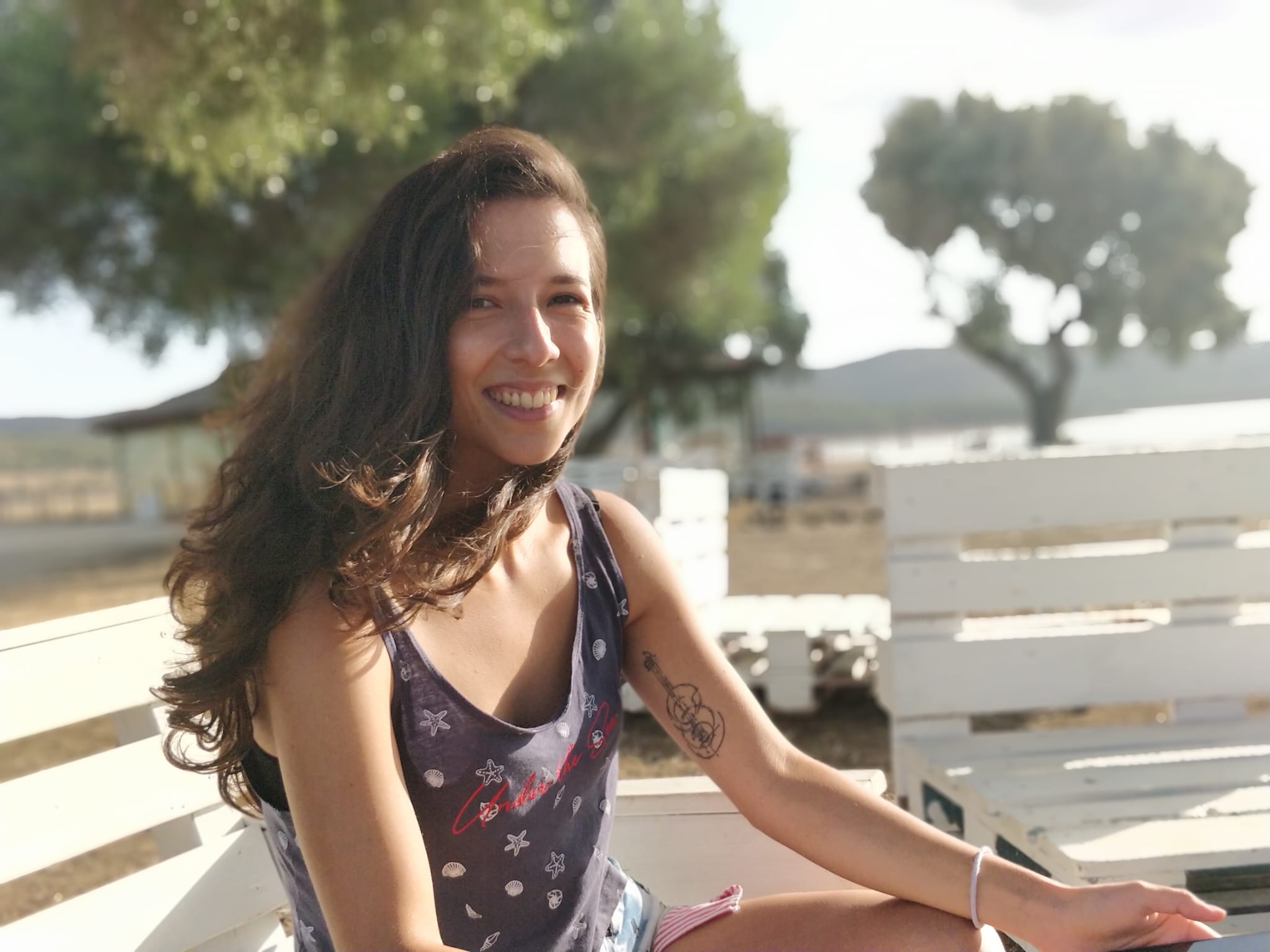
📌 Scene: Looking at the horizon through binoculars
Prompt: Create an image with the same person who appears in the attached photograph. She is looking at the horizon through binoculars.
The result? A natural-looking, well-lit outdoor scene that kept both the outfit and facial structure consistent.
2. Playing with aesthetic moments
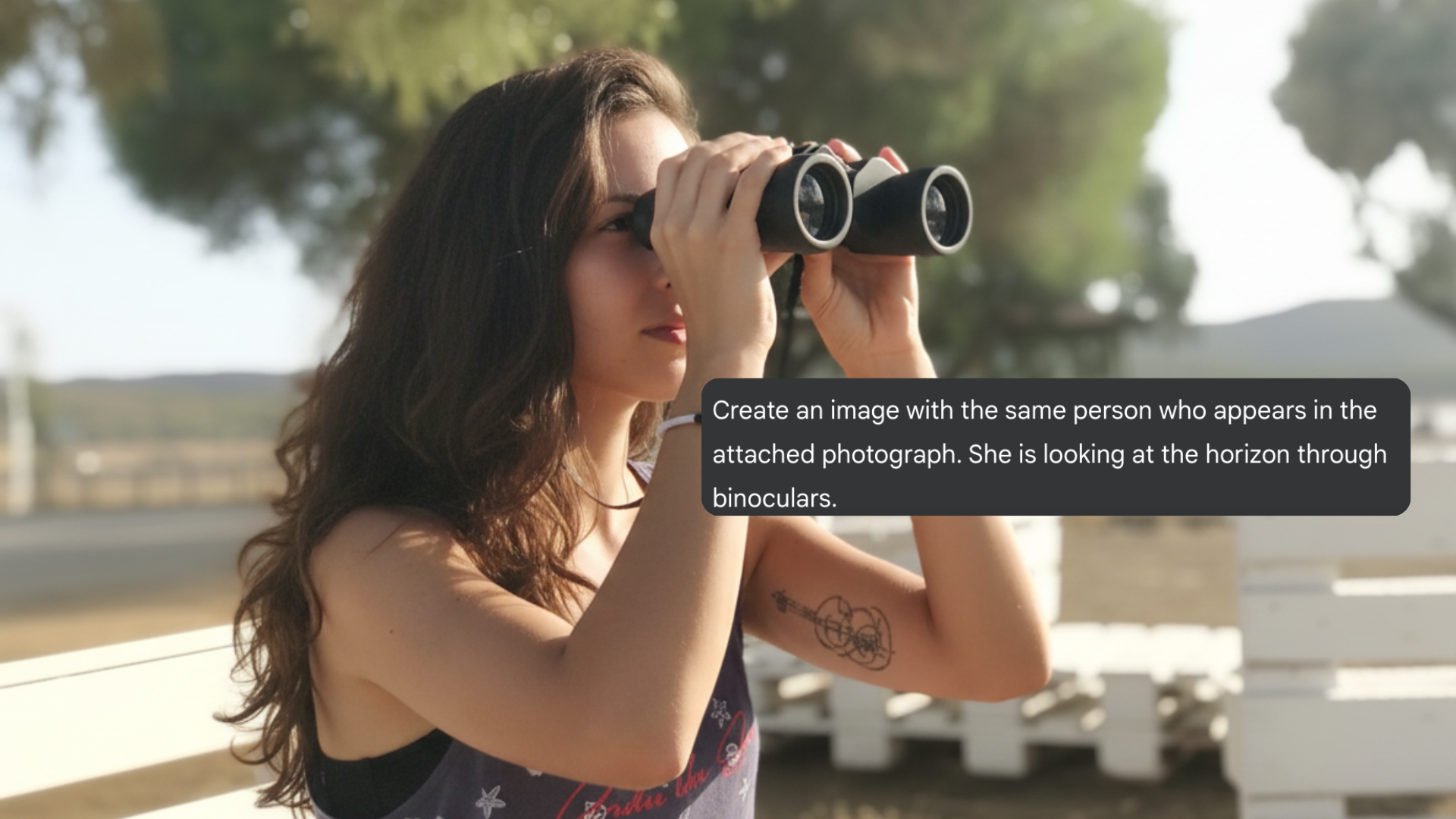
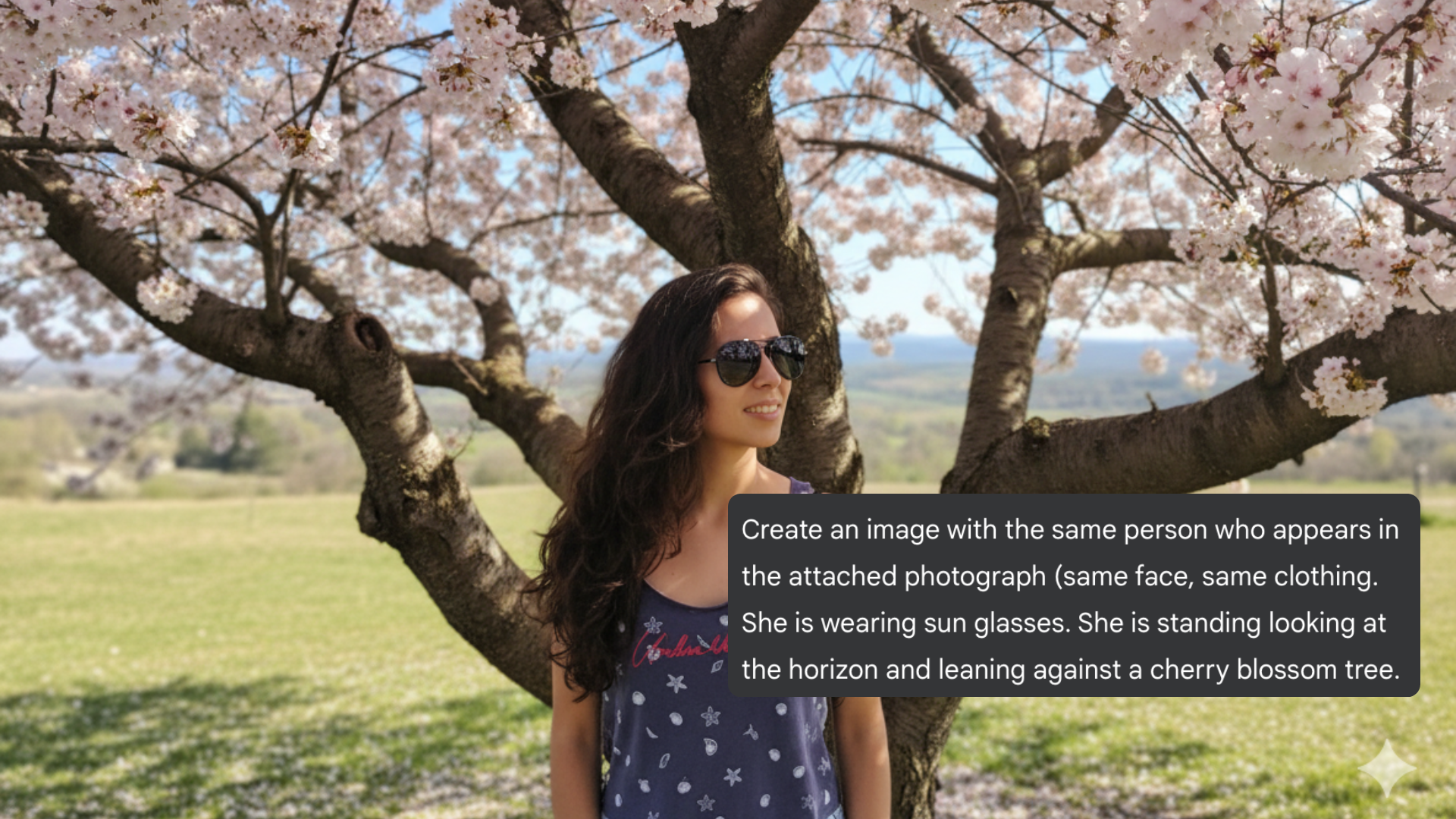
📌 Scene: Leaning against a cherry blossom tree wearing sunglasses
Prompt: Create an image with the same person who appears in the attached photograph (same face, same clothing). She is wearing sunglasses. She is standing looking at the horizon and leaning against a cherry blossom tree.
With this image, I had to try several times to get the result I wanted. As you can see, the person is not the same as in the original photo.
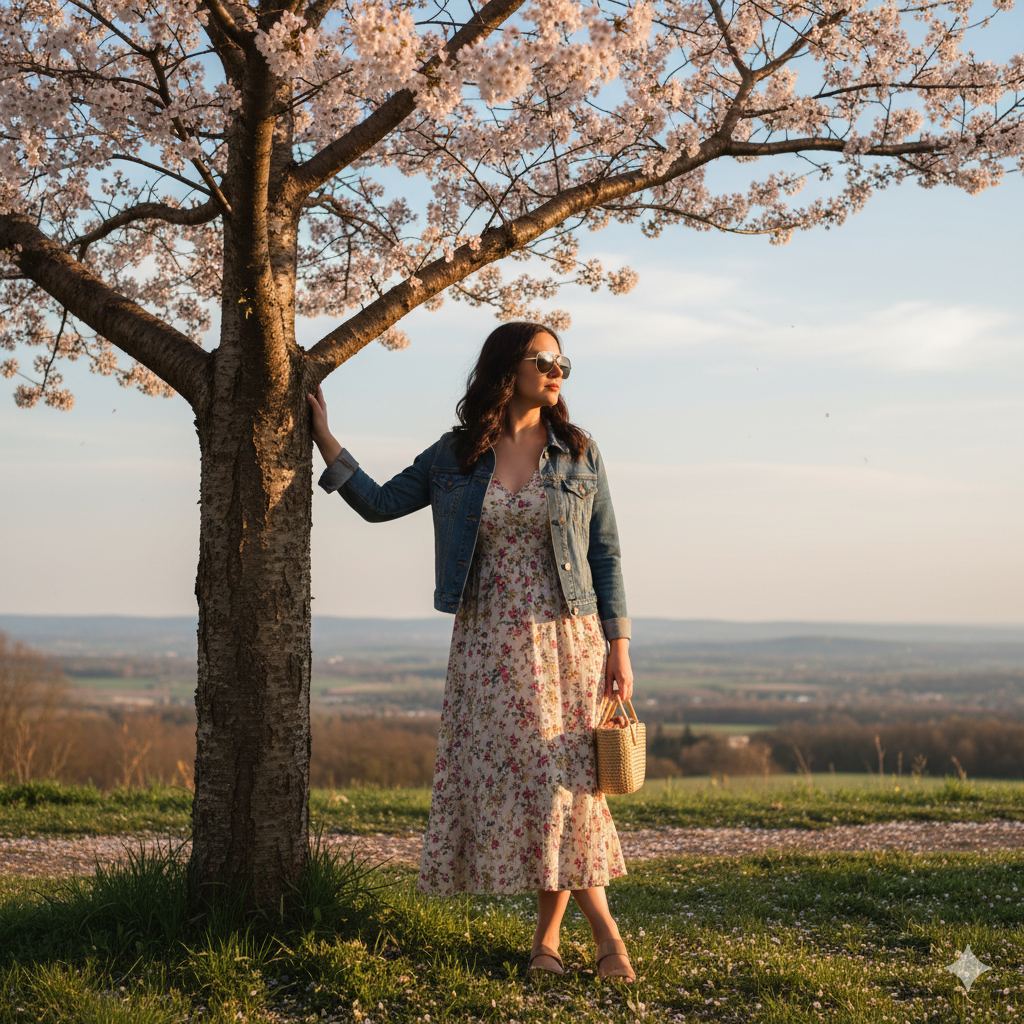
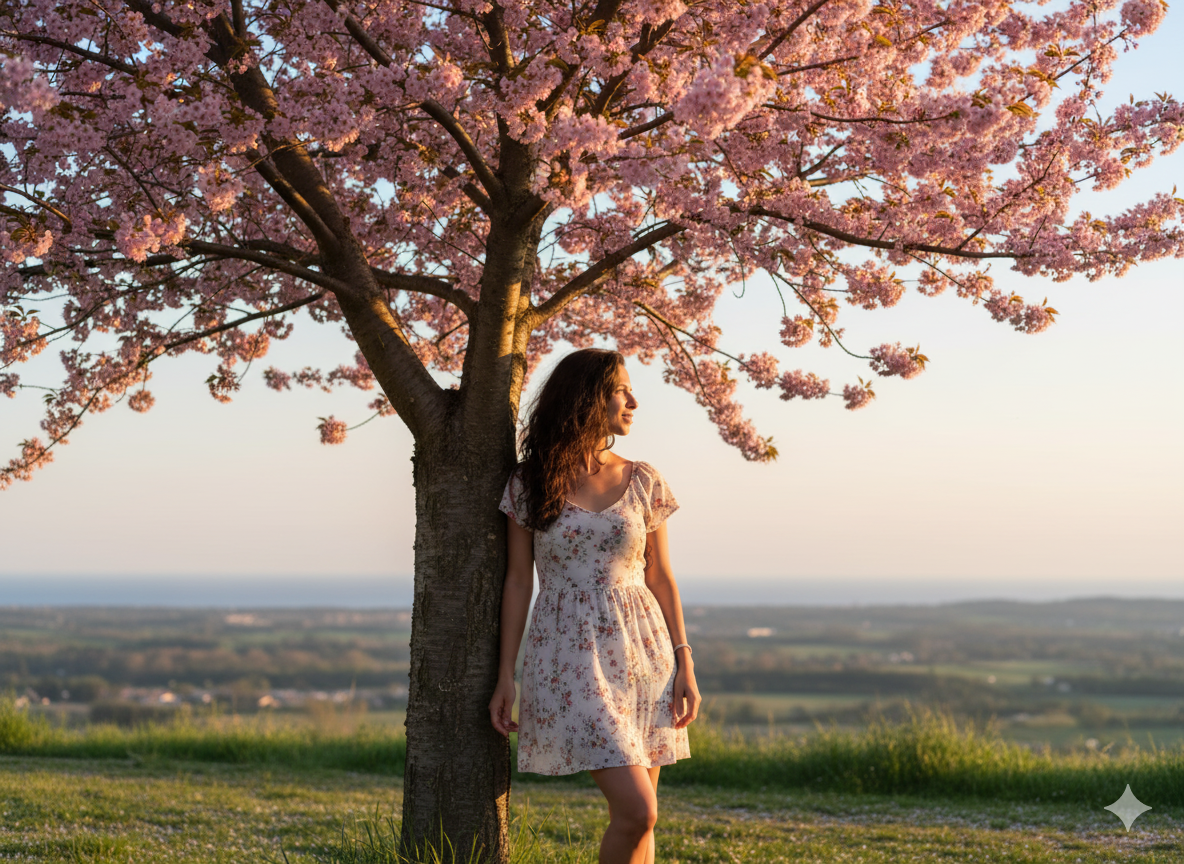
With this image, the AI came very close, but the tree was not the one desired:
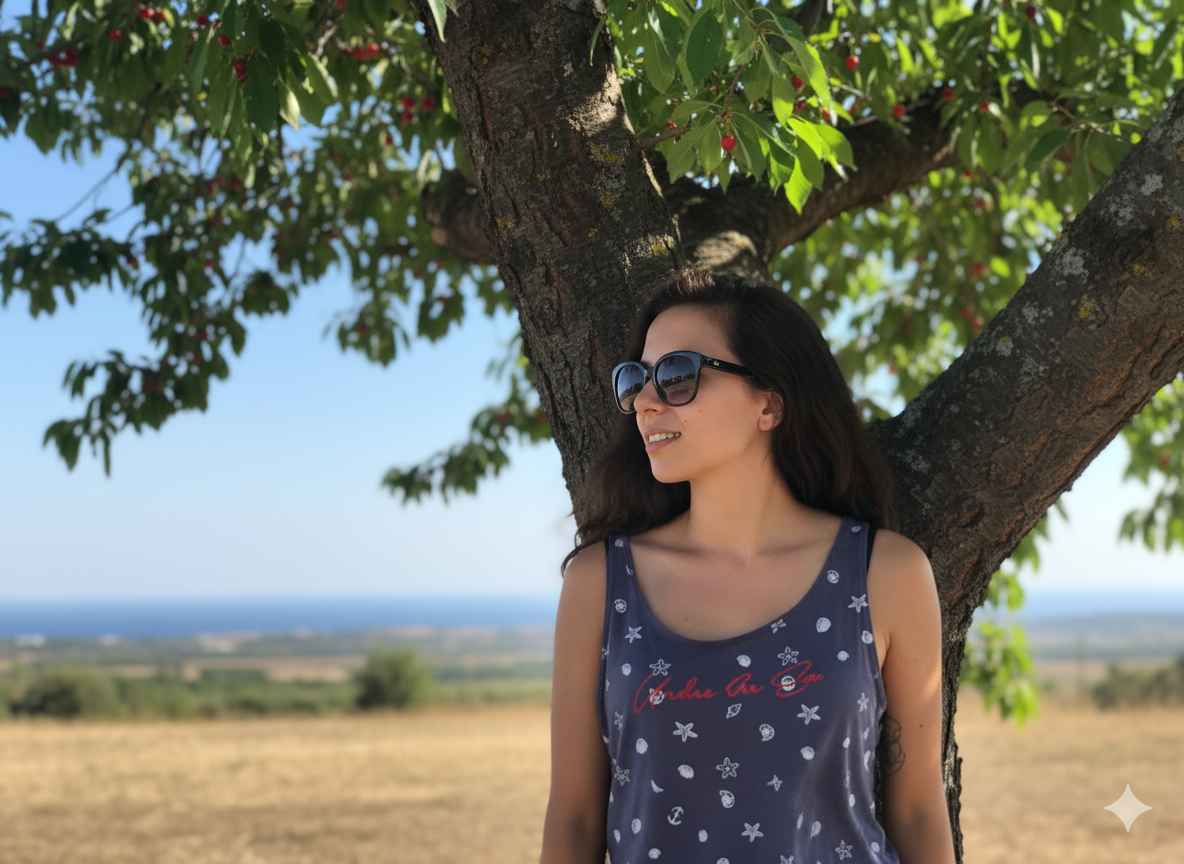
This shows what was requested. Being clear in the prompt is very important:
3. Creating lifestyle content with animals
📌 Scene: Working on a laptop surrounded by goats and a dog
Prompt: She is wearing sunglasses. She is working on her laptop. She is surrounded by two goats and a dog.
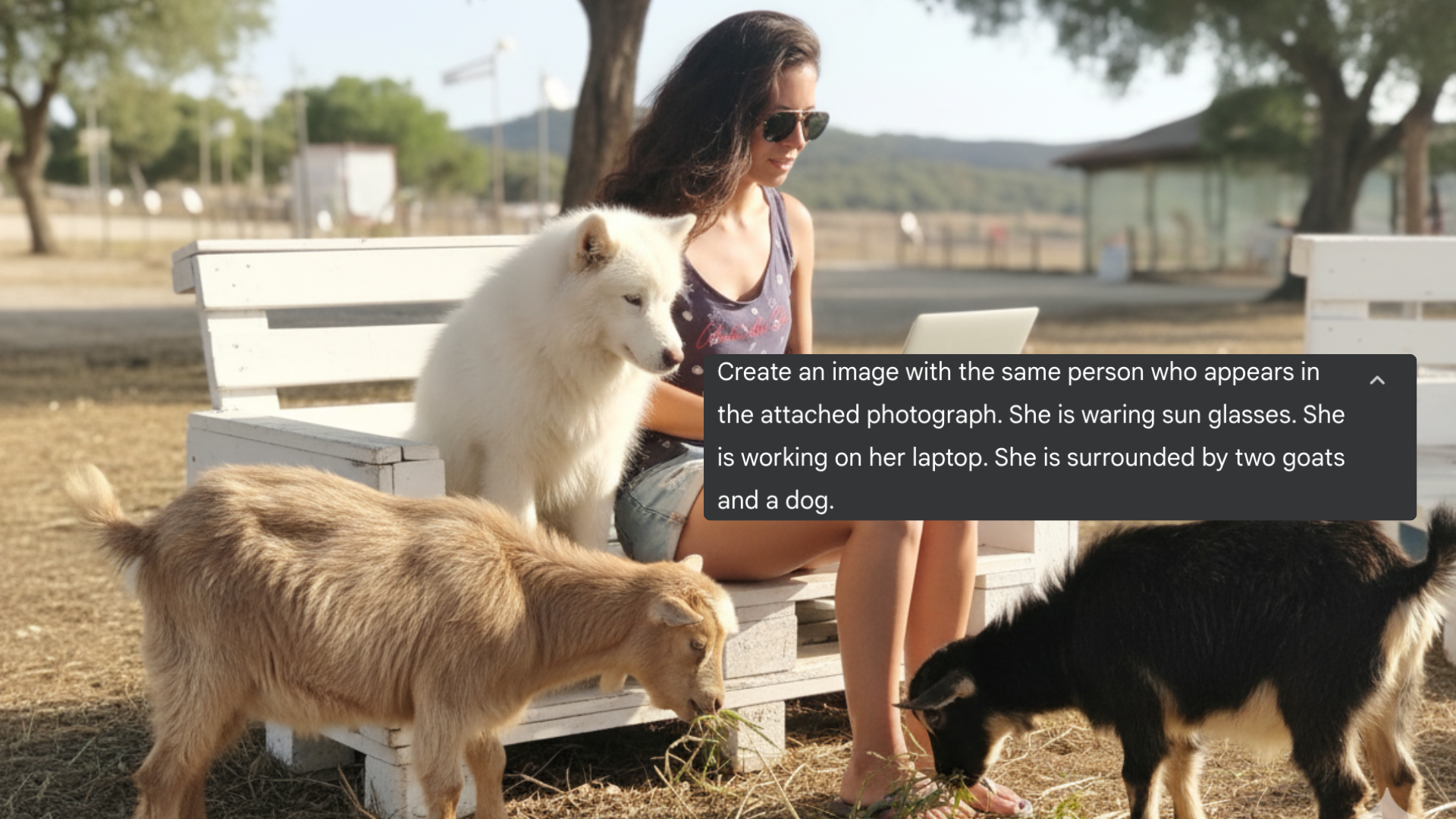
This is where realism meets absurdity — and yet, it works perfectly for playful social content.
The grand finale: A fake celebrity collab
And then… I took it one step further.
📌 Scene: A casual guitar jam session with “a celebrity”
I asked Nano Banana AI to create a friendly outdoor scene where I appear playing guitar next to a smiling musician. None other than Justin Bieber!!

Prompt: Create an image with the same person who appears in the attached photograph (same face, same clothing). She is wearing sun glasses. She is playing the guitar with the famous singer Justin Bieber.
The result looks like a spontaneous, sunlit afternoon jam session.
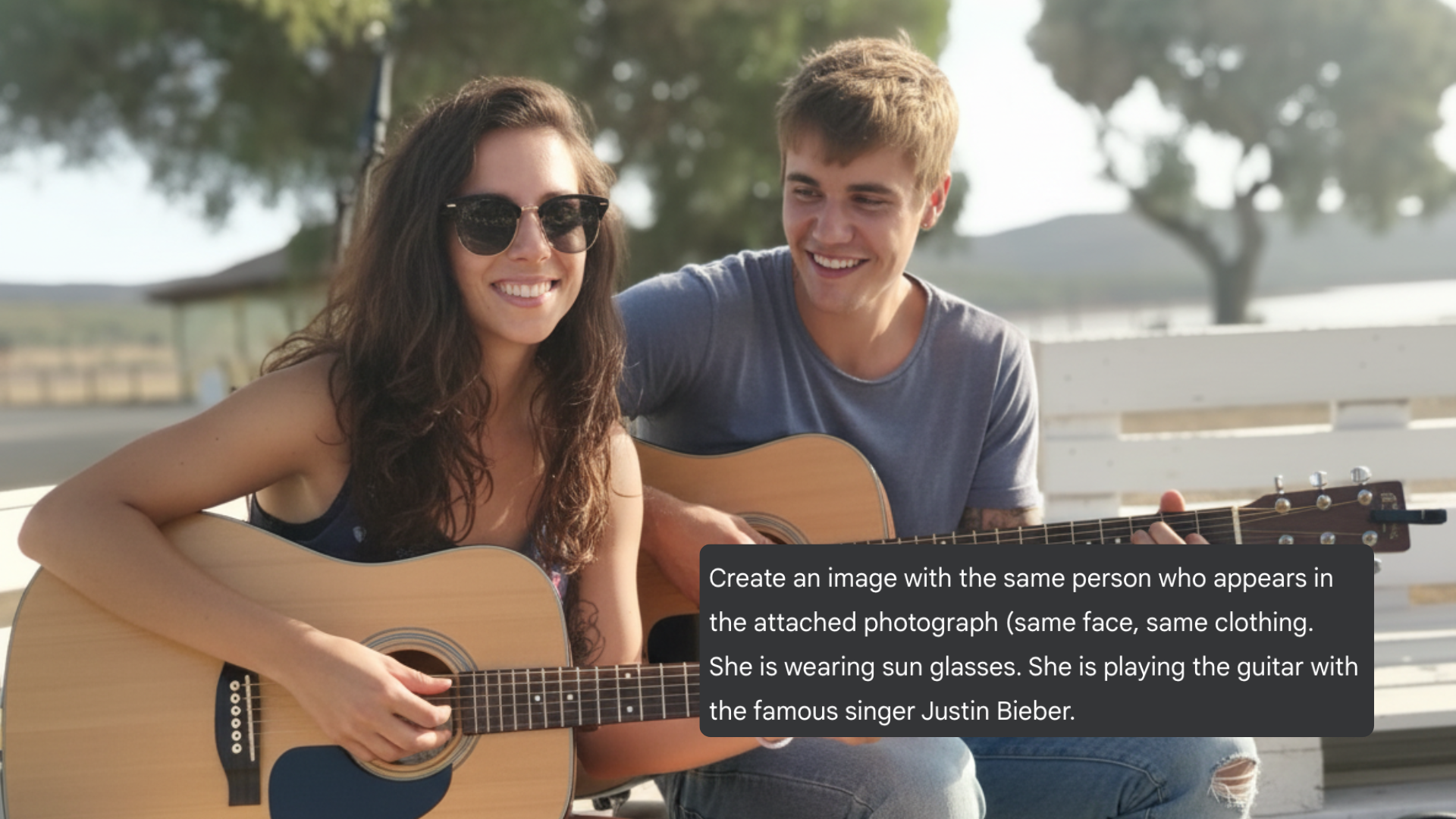
Is it real?
Absolutely not.
Does it look like the kind of post that could spark DMs, questions, and brand engagement?
Oh yes!
This is where AI becomes an ally for bold creative storytelling — not deception.
It’s about imagination, not manipulation.
Why this matters for brands and Marketing teams
Here’s the real takeaway:
AI doesn’t replace creativity. It expands it.
Brands today need:
▸ Fast, visually compelling content
▸ Scalable assets
▸ Unique storytelling angles
▸ Concepts that stand out in saturated timelines
Tools like Nano Banana AI allow teams to:
▸ Prototype campaign ideas in minutes
▸ Visualize scenes before production
▸ Build consistent characters or ambassadors
▸ Generate social content at scale
▸ Empower creative teams instead of bottle necking them
For companies exploring content marketing with AI, this case study is a glimpse of what’s possible when creativity + technology work hand in hand.
What’s next?
I’m continuing to explore AI-driven visual storytelling, and if your company is looking to:
⭐ Develop AI-enhanced content strategies
⭐ Build scalable visuals
⭐ Experiment with Google’s Nano Banana
⭐ or simply prototype wild creative concepts
I’d love to help you make it happen.
Let’s create something impossible together
If you want to collaborate, explore AI workflows, or develop next-gen marketing assets:
👉 Get in touch via Haro Media & Films.
Because the future of storytelling isn’t human or AI.
It’s the magic that happens when both collide.

Don’t miss more articles like this one on the blog.