
Artificial Intelligence can be brilliant…
…until it suddenly isn’t.
Marketers and companies everywhere are using AI for content, video, copywriting, product visuals, automation. You name it. But here’s the uncomfortable truth:
👉 AI doesn’t magically fix weak ideas, missing strategy, or badly written prompts.
In fact, a bad prompt can make your brand look chaotic, cheap, or straight-up unhinged.
If you’ve ever seen AI generate:
▸ a product that looks melted or censored,
▸ a human with seven fingers,
▸ duplicated characters that look like clones,
▸ or copy so robotic it sounds like it came from a malfunctioning printer.
Welcome. You’re exactly where you need to be.

This guide will teach you how to avoid AI disasters and how to use artificial intelligence as the powerful creative ally it CAN be, when directed well.
Why a good prompt matters more than any AI tool
Let’s be real for a moment:
AI doesn’t replace creativity, it magnifies the direction you give it.
Think of AI as a super-fast intern:
▸ Give it vague instructions → you get vague results.
▸ Give it confusing instructions → you get confusion at scale.
▸ Give it no direction → the chaos begins.
A strong prompt gives the AI clarity:
✔ Context
✔ Tone
✔ Style
✔ Audience
✔ Format
✔ Examples
✔ Constraints
A bad prompt?
“Hey AI, do something cool.”
…and then people are shocked when the output is nonsense.
Real examples of bad prompts (Yes, these happen more than you think)
Here are two classic AI fails that usually come from prompts that were too vague, incomplete, or missing constraints.
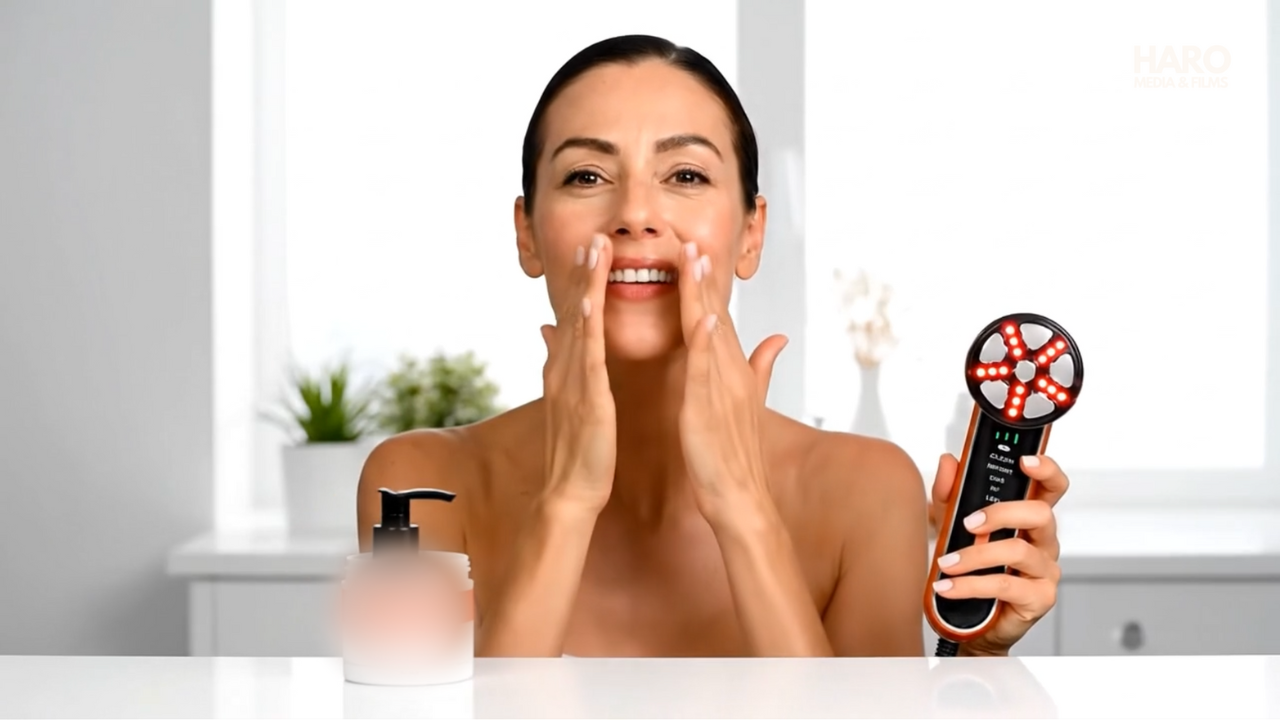
1. The skincare product with… a third arm
A model applies a skincare product while holding a LED device — and suddenly, out of nowhere, she sprouts a third arm like it’s a Marvel origin story.
Prompt: Create a short, clean video, in the style of a high-end beauty ad. A 40-year-old woman looks directly at the camera; she is in a bright, minimalist bathroom or dressing room. The woman smiles and holds the set of facial care products that I have attached in the photo. First, the woman applies the exact same cream from the attached photo to her face with gentle, elegant movements, massaging her skin. Then, while using the exact same facial machine from the attached photo, she says in a clear voice, with a Spanish accent: “This is the perfect pack for firming the face. I already notice my skin is firmer, more luminous, and the wrinkles are much less noticeable. And without having to go to cosmetic clinics."
What happened?
The prompt didn’t specify:
▸ The number of hands visible
▸ The pose or action
▸ The need for anatomical accuracy
▸ That the model should not hold multiple items at once
When instructions are vague, AI happily invents extra limbs to “help.”
As a friend asked me: So, I have to explain it to it as if it was dumb?
Yeah, exactly!

How to fix it:
Be explicit about:
▸ The position of each hand
▸ What the model is holding
▸ The action being done
▸ The need for realistic human anatomy
▸ Constraints like: “no deformities,” “no extra limbs,” “no surreal elements”
▸ Don’t ask for too many things at once.
2. The warehouse staff that duplicates itself
In this case, I tried to create a case study: An online merchant who sells camel milk. The first video was created perfectly, but using the same chat and asking for something else confused him.
First video ✅
Prompt: Create a video showing an online seller sitting at his desk, he has a laptop. On the desk are three boxes of camel milk and he is writing his ideas in a notebook. Suddenly, he looks desperately at his laptop trying to compare with the ideas written in the notebook. He puts his hands to his head in concern.
Second video ❌
Two identical women – same face, same pose, same uniform – standing in the same shot. Classic AI cloning.
Prompt: Create a video with the same man that is online seller. He is packing the camel milk in boxes for delivering. He is very happy.
What happened?
▸ Prompt was too general
▸ I used the same chat
▸ No diversity request
▸ No instruction about unique individuals
▸ No defined actions or roles
How to fix it:
Be explicit!
“How many people? Doing what? Wearing what? Representing which demographic? What movement?”
The biggest AI content mistakes marketers & companies make
1. Using AI with no strategy
If you don’t know why you’re making something, AI definitely won’t.
2. Believing “AI = perfect output”
AI is fast, not flawless. Human editing is non-negotiable.
3. Asking for “viral content”
Viral is a result, not an instruction.
4. Forgetting to set constraints
“No limits” guarantees nonsense.
5. Thinking “AI-generated” means “ready-to-publish”
Sometimes the output is great.
Other times, it gives you a woman with four elbows.
Always review.
How to write good prompts (So AI finally understands you)
1. Be specific. Brutally specific.
Instead of:
“Create a product video.”
Use:
“Create a 10-second vertical product video featuring a red LED skincare device held by a woman in her 30s. Clean, minimalistic bathroom background. Soft white lighting. Close-up angles.”
2. Give context
Tell the AI what the content is for:
Marketing, e-commerce, UGC, educational, premium brand, etc.
3. Provide style references
This instantly upgrades accuracy.
Examples: “minimalist aesthetic”, “cinematic lighting”, “UGC style”, “inspired by X brand”.
4. Define tone of voice
Informal? Premium? Scientific? Fun?
Tone changes everything.
5. Tell it what NOT to do
This is a secret weapon.
“Do NOT duplicate people.”
“Avoid distorted packaging.”
“No surreal elements.”
6. Give examples of good AND bad output
Contrast directs AI far better than praise alone.
Advanced AI prompting tips for marketers & teams
1. Use “Role Prompting”
“Act as a senior content strategist for a beauty brand.”
→ This changes how AI thinks.
2. Use multi-step prompting
Break the task into:
✔ Brainstorm
✔ Select idea
✔ Draft
✔ Improve
✔ Refine
✔ Final polish
3. Upload (or describe) your brand voice
Let the AI breathe your style, your tone, your rhythm.
4. Always keep human review at the end
AI helps you create.
But YOU are still the director.
Final thoughts: AI doesn’t replace creative direction – It depends on it
AI isn’t the creative genius.
You are.

AI is the tool – powerful, fast, impressive – but still a tool.
With strong prompts, it becomes a content powerhouse.
With weak prompts… well, you’ve seen the chaos:
blurred bottles, cloned employees, and content no brand wants to publish.
So write better prompts.
Direct your AI like you’d direct a creative team.
Use it as your ally, not your autopilot.
And if you ever need help turning AI chaos into clean, strategic, scroll-stopping content?
👉 Haro Media & Films – Where strategy meets creativity (and AI behaves).

Don’t miss more articles like this one on the blog.